Cortisol and Central Adiposity
Published: February 2026
The Stress Hormone Connection
Cortisol, the body's primary stress hormone, plays a role in fat distribution and storage. Research indicates that chronic cortisol elevation is associated with preferential central (abdominal) fat accumulation. This connection between stress hormones and regional fat storage illustrates how physiological systems regulate where the body stores fat.
Central adiposity—fat stored in the abdominal region—appears to be partly influenced by cortisol signaling. This doesn't mean that reducing stress will change body shape, but rather that hormonal systems influence where fat is stored at a physiological level.
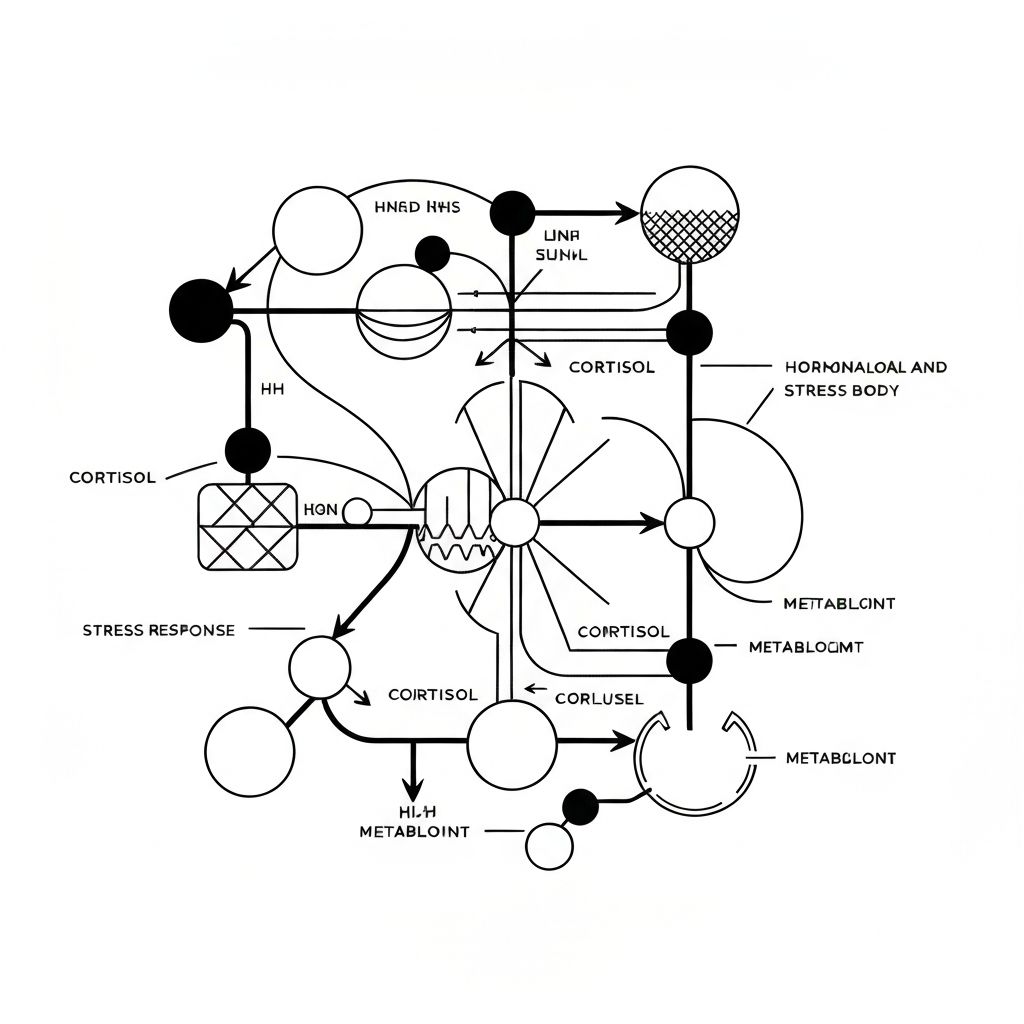
Cortisol's Metabolic Effects
Cortisol influences fat distribution through multiple mechanisms. It affects which fat cells respond to signals to store or mobilize fat, influences insulin sensitivity in different tissues, and modulates the activity of enzymes involved in fat metabolism. These effects are not uniform across the body—visceral and central fat cells are more responsive to cortisol than other fat deposits.
Chronic Stress and Fat Storage
Chronically elevated cortisol is associated with increased central fat storage. However, the relationship is complex and involves multiple interconnected systems. Genetic factors, baseline stress sensitivity, and overall metabolic health all interact with cortisol levels to determine fat distribution outcomes.
While reducing stress may have general health benefits, it is not a reliable method for changing body shape or regional fat distribution. The relationship between stress and fat storage is influenced by too many individual factors to be easily manipulated through lifestyle modifications.
Individual Variation
Not everyone responds the same way to chronic stress or elevated cortisol. Some individuals show greater central fat accumulation under stress, while others do not. This individual variation reflects differences in stress hormone sensitivity, genetic factors, and baseline metabolic characteristics.
Conclusion
Cortisol and stress hormones influence where the body stores fat through complex physiological mechanisms that favor central and visceral fat accumulation. Understanding this connection illustrates how hormonal systems regulate fat distribution—not as something individuals directly control, but as a result of underlying physiological processes.
Educational Information Only
This article presents information about stress hormones and physiology for educational purposes. It does not constitute medical or psychological advice. For concerns about stress or health, consult qualified professionals.