Android vs Gynoid Fat Distribution
Published: February 2026
Two Primary Distribution Patterns
Human fat distribution follows distinct regional patterns that are largely determined by genetics and hormones. The two primary patterns are android and gynoid fat distribution, terms describing where the body tends to store fat tissue.
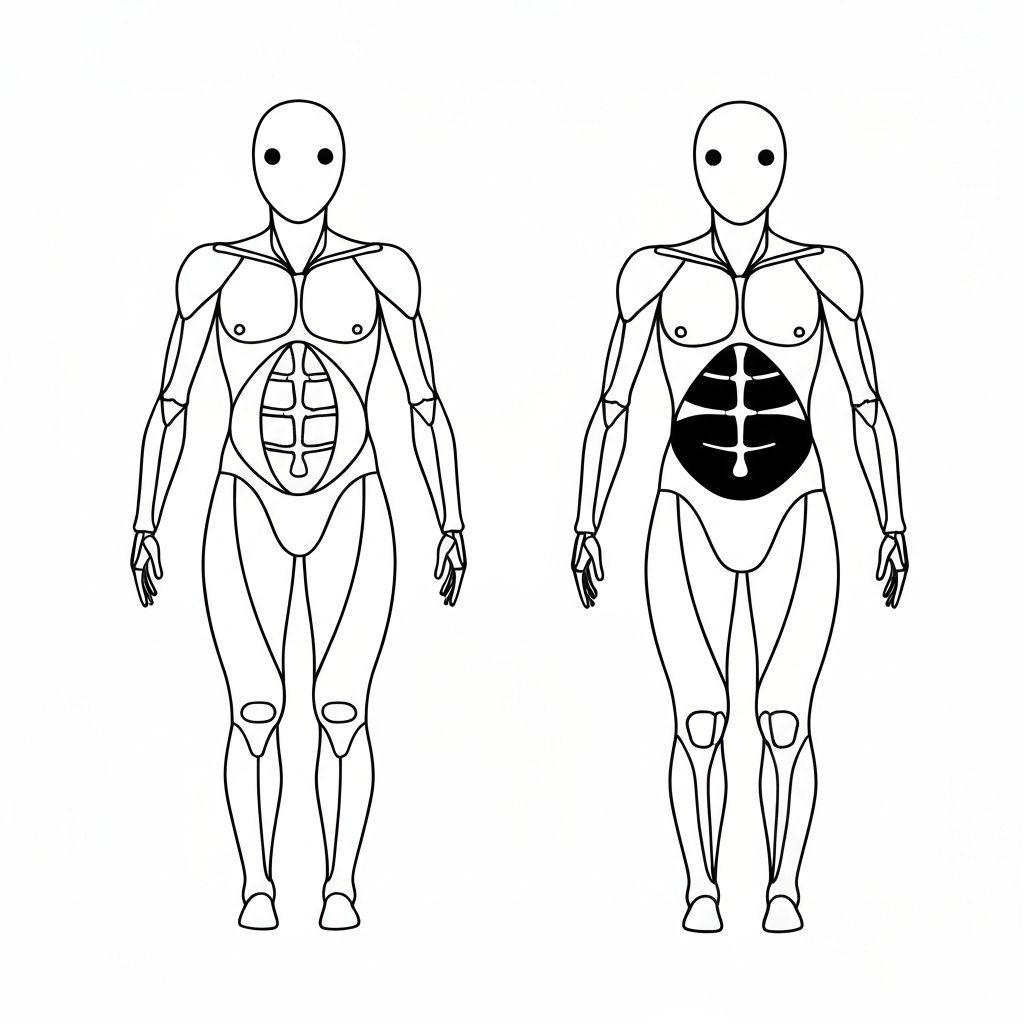
Android fat distribution, sometimes called "apple-shaped" distribution, involves preferential fat storage in the abdominal and upper body regions. Gynoid fat distribution, sometimes called "pear-shaped" distribution, involves greater fat accumulation in the hips, thighs, and lower body regions.
Hormonal Influences on Distribution Patterns
The primary determinant of which pattern an individual follows is hormonal. Androgens (male hormones) promote android fat distribution—upper body accumulation. Estrogen promotes gynoid fat distribution—lower body accumulation. This explains why pre-menopausal women typically show more gynoid patterns, while men typically show more android patterns.
However, individual variation is significant. Many people show mixed patterns, and the degree to which an individual follows either pattern depends on individual hormonal sensitivity and genetic factors.
Genetic Component
The tendency toward android or gynoid distribution is heritable. Twin studies show that siblings tend to follow similar distribution patterns, even when total body fat differs. This suggests a strong genetic component to regional fat storage preferences.
Stability of Distribution Patterns
Research indicates that fat distribution patterns tend to remain relatively consistent across the lifespan, despite fluctuations in total body weight. A person with primarily gynoid distribution tends to remain primarily gynoid even with weight gain or loss. This pattern stability reflects the underlying genetic and physiological constraints on regional fat storage.
Conclusion
Android and gynoid fat distribution patterns represent two common regional storage strategies determined primarily by hormone sensitivity and genetics. These patterns have physiological meaning and help explain natural variation in human body shape. Understanding these patterns as inherent aspects of individual physiology—rather than outcomes of personal effort—aligns with current scientific evidence.
Educational Information Only
This article presents information about body shape physiology for educational purposes. It does not constitute medical advice or recommendations for weight management. For personalized health guidance, consult qualified healthcare professionals.